Russian Crimes in Ukraine: Evidence, Allegations, and International Response
Russian Crimes in Ukraine: Evidence, Allegations, and International Response
Russian Crimes in Ukraine: Evidence, Allegations, and International Response
Russian Crimes in Ukraine: Evidence, Allegations, and International Response
Russian Crimes in Ukraine: Evidence, Allegations, and International Response
Russian Crimes in Ukraine: Evidence, Allegations, and International Response
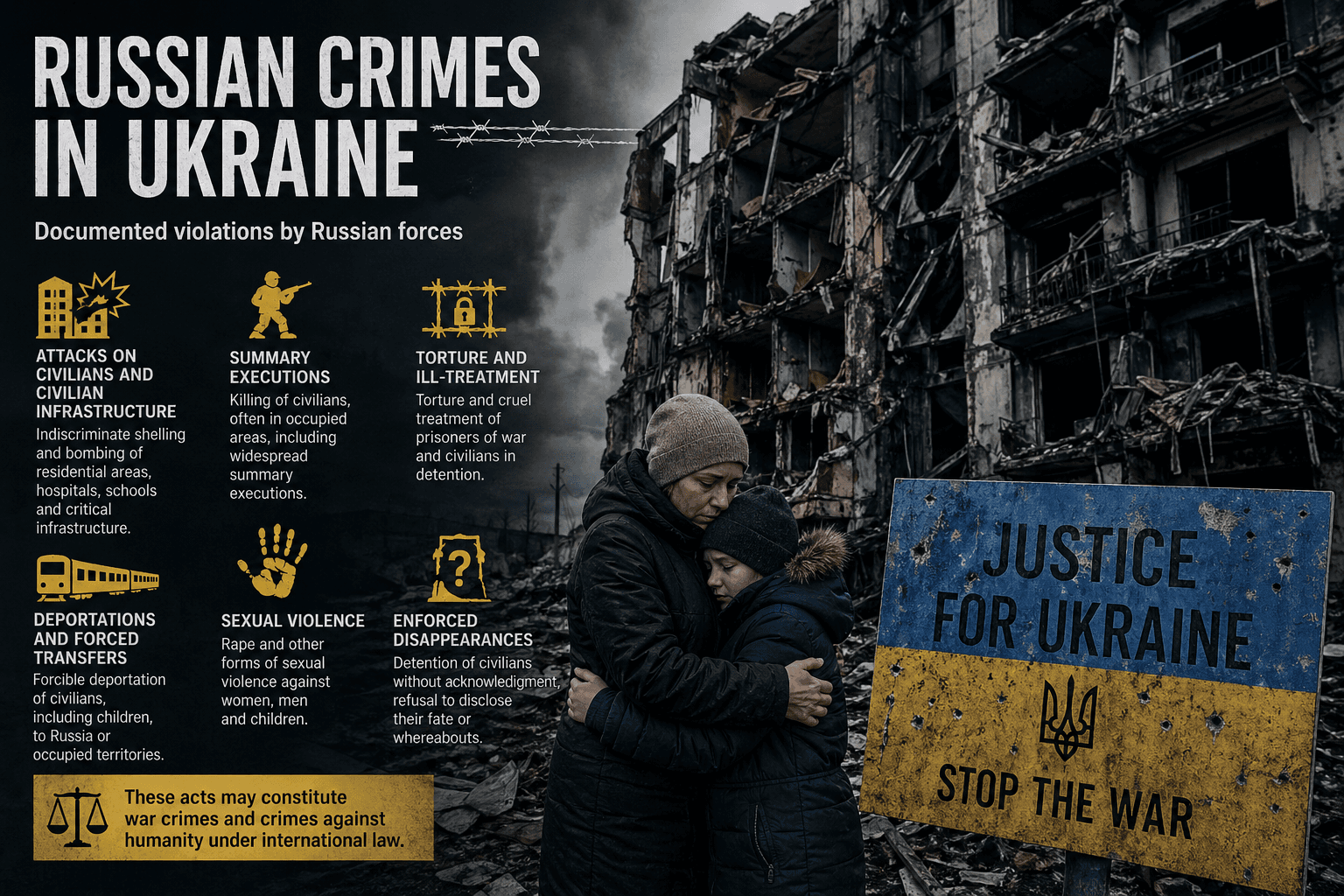
Since the full-scale invasion of Ukraine by Russia in February 2022, numerous reports from international organizations, governments, and human rights groups have documented alleged war crimes and crimes against humanity committed during the conflict. These accusations are based on investigations by bodies such as the United Nations, human rights organizations, and independent journalists. Documented Categories of Crimes One of the most widely reported categories involves attacks on civilians and civilian infrastructure. According to reports from the United Nations and groups like Human Rights Watch, Russian forces have carried out indiscriminate and disproportionate attacks that killed and injured civilians while damaging homes, hospitals, and energy systems. UN investigations have also documented summary executions of civilians, particularly in areas temporarily occupied by Russian troops early in the war. Another major category is torture and mistreatment of prisoners of war and civilians. Evidence gathered by international monitors indicates that detainees have been subjected to torture, ill-treatment, and coercive interrogations. Deportations and Forced Transfers A particularly serious accusation involves the forcible deportation of civilians, including children, from occupied Ukrainian territories into Russia. UN investigators have stated that such actions may amount to crimes against humanity, especially when carried out on a large scale and systematically. Reports also describe the transfer and re-education of Ukrainian children, raising concerns about cultural erasure and violations of international law. Sexual Violence and Other Abuses International inquiries have found evidence of rape and other forms of sexual violence committed in occupied areas. These acts are considered war crimes under international humanitarian law. Additionally, enforced disappearances—where civilians are detained without acknowledgment—have been reported and may also constitute crimes against humanity. Scale and Ongoing Nature The scale of alleged crimes is significant. Ukrainian authorities have opened tens of thousands of investigations into potential war crimes. Independent monitors report that civilian casualties continue to rise, with hundreds killed or injured in single months as the war continues. Recent reporting also shows ongoing attacks affecting civilians and infrastructure, as well as broader “hybrid” actions linked to Russian intelligence operations beyond Ukraine’s borders. Legal and International Response International law defines such acts—war crimes, crimes against humanity, and potentially genocide—as the most serious violations. Efforts are underway to hold perpetrators accountable through international mechanisms, including investigations by the International Criminal Court (ICC) and UN commissions. Governments and organizations continue to gather evidence to support future prosecutions. Conclusion The war in Ukraine has generated a substantial body of evidence pointing to systematic violations of international humanitarian law by Russian forces. While Russia denies many of these allegations, multiple independent investigations have concluded that serious crimes have occurred. The full legal determination of responsibility will depend on ongoing and future judicial processes, but the documented impact on civilians has already made the conflict one of the most scrutinized in modern history.
Since the full-scale invasion of Ukraine by Russia in February 2022, numerous reports from international organizations, governments, and human rights groups have documented alleged war crimes and crimes against humanity committed during the conflict. These accusations are based on investigations by bodies such as the United Nations, human rights organizations, and independent journalists. Documented Categories of Crimes One of the most widely reported categories involves attacks on civilians and civilian infrastructure. According to reports from the United Nations and groups like Human Rights Watch, Russian forces have carried out indiscriminate and disproportionate attacks that killed and injured civilians while damaging homes, hospitals, and energy systems. UN investigations have also documented summary executions of civilians, particularly in areas temporarily occupied by Russian troops early in the war. Another major category is torture and mistreatment of prisoners of war and civilians. Evidence gathered by international monitors indicates that detainees have been subjected to torture, ill-treatment, and coercive interrogations. Deportations and Forced Transfers A particularly serious accusation involves the forcible deportation of civilians, including children, from occupied Ukrainian territories into Russia. UN investigators have stated that such actions may amount to crimes against humanity, especially when carried out on a large scale and systematically. Reports also describe the transfer and re-education of Ukrainian children, raising concerns about cultural erasure and violations of international law. Sexual Violence and Other Abuses International inquiries have found evidence of rape and other forms of sexual violence committed in occupied areas. These acts are considered war crimes under international humanitarian law. Additionally, enforced disappearances—where civilians are detained without acknowledgment—have been reported and may also constitute crimes against humanity. Scale and Ongoing Nature The scale of alleged crimes is significant. Ukrainian authorities have opened tens of thousands of investigations into potential war crimes. Independent monitors report that civilian casualties continue to rise, with hundreds killed or injured in single months as the war continues. Recent reporting also shows ongoing attacks affecting civilians and infrastructure, as well as broader “hybrid” actions linked to Russian intelligence operations beyond Ukraine’s borders. Legal and International Response International law defines such acts—war crimes, crimes against humanity, and potentially genocide—as the most serious violations. Efforts are underway to hold perpetrators accountable through international mechanisms, including investigations by the International Criminal Court (ICC) and UN commissions. Governments and organizations continue to gather evidence to support future prosecutions. Conclusion The war in Ukraine has generated a substantial body of evidence pointing to systematic violations of international humanitarian law by Russian forces. While Russia denies many of these allegations, multiple independent investigations have concluded that serious crimes have occurred. The full legal determination of responsibility will depend on ongoing and future judicial processes, but the documented impact on civilians has already made the conflict one of the most scrutinized in modern history.
Since the full-scale invasion of Ukraine by Russia in February 2022, numerous reports from international organizations, governments, and human rights groups have documented alleged war crimes and crimes against humanity committed during the conflict. These accusations are based on investigations by bodies such as the United Nations, human rights organizations, and independent journalists. Documented Categories of Crimes One of the most widely reported categories involves attacks on civilians and civilian infrastructure. According to reports from the United Nations and groups like Human Rights Watch, Russian forces have carried out indiscriminate and disproportionate attacks that killed and injured civilians while damaging homes, hospitals, and energy systems. UN investigations have also documented summary executions of civilians, particularly in areas temporarily occupied by Russian troops early in the war. Another major category is torture and mistreatment of prisoners of war and civilians. Evidence gathered by international monitors indicates that detainees have been subjected to torture, ill-treatment, and coercive interrogations. Deportations and Forced Transfers A particularly serious accusation involves the forcible deportation of civilians, including children, from occupied Ukrainian territories into Russia. UN investigators have stated that such actions may amount to crimes against humanity, especially when carried out on a large scale and systematically. Reports also describe the transfer and re-education of Ukrainian children, raising concerns about cultural erasure and violations of international law. Sexual Violence and Other Abuses International inquiries have found evidence of rape and other forms of sexual violence committed in occupied areas. These acts are considered war crimes under international humanitarian law. Additionally, enforced disappearances—where civilians are detained without acknowledgment—have been reported and may also constitute crimes against humanity. Scale and Ongoing Nature The scale of alleged crimes is significant. Ukrainian authorities have opened tens of thousands of investigations into potential war crimes. Independent monitors report that civilian casualties continue to rise, with hundreds killed or injured in single months as the war continues. Recent reporting also shows ongoing attacks affecting civilians and infrastructure, as well as broader “hybrid” actions linked to Russian intelligence operations beyond Ukraine’s borders. Legal and International Response International law defines such acts—war crimes, crimes against humanity, and potentially genocide—as the most serious violations. Efforts are underway to hold perpetrators accountable through international mechanisms, including investigations by the International Criminal Court (ICC) and UN commissions. Governments and organizations continue to gather evidence to support future prosecutions. Conclusion The war in Ukraine has generated a substantial body of evidence pointing to systematic violations of international humanitarian law by Russian forces. While Russia denies many of these allegations, multiple independent investigations have concluded that serious crimes have occurred. The full legal determination of responsibility will depend on ongoing and future judicial processes, but the documented impact on civilians has already made the conflict one of the most scrutinized in modern history.

Stay Connected.
Shape the Future.
Join us in empowering displaced Ukrainians, building resilient communities, and contributing to the future of Ukraine. Explore our work, get involved, or partner with us—your support makes a lasting difference.
Social Media








E-mail on:
Every donation helps someone get the assistance they need — right when they need it.
Stay Connected.
Shape the Future.
Join us in empowering displaced Ukrainians, building resilient communities, and contributing to the future of Ukraine. Explore our work, get involved, or partner with us—your support makes a lasting difference.
Social Media
E-mail on:
Every donation helps someone get the assistance they need — right when they need it.
Stay Connected.
Shape the Future.
Join us in empowering displaced Ukrainians, building resilient communities, and contributing to the future of Ukraine. Explore our work, get involved, or partner with us—your support makes a lasting difference.
Social Media
E-mail on: